Red Light Therapy: What the Science Says (and Why It May Help Your Body Do What It Was Designed to Do)
I believe our bodies were created with an incredible ability to heal. That doesn't mean we always heal perfectly or that every therapy works for every person. But I do believe our bodies are constantly working to repair, adapt, and restore balance when they're given the right support.
One of the therapies that has gained a lot of my attention recently is red light therapy.
I was immediately sold based on personal experience with using sunlight to help heal, but I knew others would ask, how could something as simple as light possibly influence our health?
The more I learned—and the more scientific research I read—the more I realized this wasn't just another wellness trend. Red light therapy, also known as photobiomodulation, has been studied for decades by researchers around the world. Today it's being investigated for everything from wound healing and muscle recovery to skin health, joint pain, and neurological conditions.
Like many natural therapies, it isn't a magic cure. It won't replace good nutrition, sleep, exercise, or medical care when needed.
But what makes red light therapy so fascinating is that instead of forcing the body to do something unnatural, it appears to support processes your body is already trying to perform every second of every day.
Let's explore why.


First, What Exactly Is Red Light Therapy?
Red light therapy uses specific wavelengths of visible red and invisible near-infrared light to stimulate activity inside our cells.
Unlike ultraviolet (UV) light from the sun, which can damage DNA when overexposure occurs, red and near-infrared light are non-ionizing. That means they don't carry enough energy to damage DNA in the same way UV radiation can.
Instead, these wavelengths penetrate into tissues where they interact with structures inside our cells.
This is why you'll often hear scientists refer to red light therapy by its research name:
Photobiomodulation.
Breaking the word apart actually explains what it does:
- Photo = light
- Bio = living tissue
- Modulation = influencing or adjusting normal biological function
Rather than overpowering the body, photobiomodulation appears to encourage cells to function more efficiently.
It All Starts With Your Mitochondria
If you remember one thing from this article, let it be this:
Healthy cells need energy.
Every heartbeat.
Every breath.
Every muscle contraction.
Every healing wound.
Every immune response.
Every one of these processes requires energy.
Inside nearly every cell are tiny structures called mitochondria. They're often called the power plants of the cell because they produce ATP (adenosine triphosphate)—the molecule your cells use as fuel.
Researchers believe one of the primary targets of red and near-infrared light is an enzyme within the mitochondria called cytochrome c oxidase, part of the electron transport chain that produces ATP. Laboratory studies suggest that when these wavelengths are absorbed, they can influence cellular respiration and increase ATP production under certain conditions.
Think of it like this:
If your body were a city, mitochondria would be the power stations. ATP would be the electricity flowing to every home, hospital, traffic light, and business. When the power supply becomes more efficient, the entire city functions better.
Your body works much the same way.
Why More Cellular Energy Matters
Cells don't simply sit there waiting to become damaged.
They're constantly repairing DNA, replacing proteins, producing collagen, fighting infections, regulating inflammation, and communicating with neighboring cells.
All of those processes require energy.
Researchers believe that by improving mitochondrial efficiency, photobiomodulation may help support many of the body's normal repair mechanisms.
This doesn't mean red light therapy "heals everything."
It means healthier cellular energy may give tissues the resources they need to perform the jobs they were already designed to do.
Red Light vs. Near-Infrared Light
Many people think all red light devices are the same.
They're not.
Different wavelengths penetrate to different depths and may influence different tissues.
Generally speaking:
- Visible red light (around 630–670 nm) is absorbed more superficially and is commonly studied for skin health, collagen production, wound healing, and surface inflammation.
- Near-infrared light (around 810–850 nm) penetrates deeper into muscles, joints, connective tissue, and other structures beneath the skin.
That's one reason many high-quality devices combine several wavelengths rather than relying on only one.
What Does the Research Actually Show?
One thing I appreciate about red light therapy is that there isn't just one study supporting it.
There are now thousands of published scientific papers investigating photobiomodulation.
Like every area of medicine, not every study reaches the same conclusion, and researchers continue to refine the ideal wavelengths, treatment times, and doses. But several areas have accumulated encouraging evidence.
Skin Health
Perhaps the strongest evidence exists for skin rejuvenation.
Multiple clinical studies have shown improvements in collagen production, skin elasticity, fine lines, and overall skin appearance after consistent treatment.
Researchers believe these improvements occur because fibroblasts—the cells responsible for producing collagen and elastin—appear to become more active when exposed to appropriate wavelengths of red light.
Rather than covering up aging skin, the goal is to support the skin's natural repair processes.
Pain and Inflammation
Pain is one of the most extensively studied applications of photobiomodulation.
Systematic reviews have found that red light therapy may help reduce pain and improve function in certain musculoskeletal conditions, including osteoarthritis, neck pain, and tendinopathies. Researchers believe this may be related to changes in inflammatory signaling, circulation, and tissue repair, though results can vary depending on the condition and treatment protocol.
Exercise Recovery
This is one of my favorite areas of research.
Several studies involving athletes have found that red light therapy used before or after exercise may reduce muscle soreness, improve recovery, and sometimes enhance performance or delay fatigue.
For anyone who exercises regularly—or simply wants to recover more comfortably after a workout—that's an exciting area of ongoing research.
Wound Healing
Red light therapy has also shown promise in supporting tissue repair.
Researchers have observed faster healing in certain wounds and improvements in tissue regeneration under specific treatment protocols. Scientists believe enhanced cellular energy, improved circulation, and changes in inflammatory signaling all contribute to this process.
Brain Health
One of the newest and most exciting areas of research involves the brain.
Early clinical studies suggest transcranial photobiomodulation may improve certain aspects of cognition, mood, and recovery after neurological injury. While these findings are encouraging, larger studies are still needed before firm conclusions can be drawn.
More Isn't Always Better
One of the biggest misconceptions is that brighter lights or longer sessions automatically produce better results.
Photobiomodulation doesn't work that way.
Researchers describe something called a biphasic dose response—sometimes referred to as the Arndt-Schulz principle—which suggests that too little light may have minimal effect, while too much may reduce the desired response.
In other words:
The right dose matters.
That's why wavelength, irradiance (light intensity), treatment distance, and treatment time are all important considerations.
What Makes One Device Better Than Another?
Not all red light therapy devices are created equally.
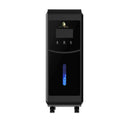
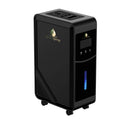
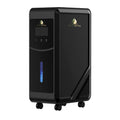
When I began researching products for RevitaSpring, I wasn't interested in finding the least expensive option.
I wanted devices I would feel comfortable bringing into my own home.
Some of the features I looked for included:
- Multiple clinically studied wavelengths
- High irradiance without excessive heat
- Ultra-low EMF design
- Quality LEDs
- Durable construction
- Transparent specifications
- Manufacturers willing to provide detailed technical information
Because if we're depending on a device to help us, I believe quality matters.
My Thoughts
After spending years learning about natural health—and after my own journey recovering from mold and chemical exposure—I've become cautious about quick fixes and miracle claims.
Red light therapy isn't magic.
It won't replace healthy eating.
It won't replace movement.
It won't replace sleep.
But it may help support the incredible systems your body already uses every single day to repair, recover, and maintain health.
That, to me, is what makes it so remarkable.
The more we learn about photobiomodulation, the more we're discovering that something as simple as light may influence biology in ways we are only beginning to understand.
And I think that's worth paying attention to.
References
- Hamblin MR. Photobiomodulation for the management of pain and inflammation: mechanisms and clinical applications.
- Hamblin MR. Mechanisms and applications of photobiomodulation.
-
de Freitas LF, Hamblin MR. Proposed mechanisms of photobiomodulation or low-level light therapy.
Let's Explore the Research: Red Light Therapy Studies Explained
Scientific references can sometimes feel like a wall of unfamiliar names and technical language. To make the research easier to understand, I’ve gathered several helpful studies and reviews below and included a simple explanation of what each one tells us.
You may notice that researchers often use the terms photobiomodulation, low-level light therapy, low-level laser therapy, or PBM. Although the devices and treatment parameters may differ, these terms generally refer to the use of nonthermal red or near-infrared light to influence biological activity.
It is also important to remember that photobiomodulation is not one standardized treatment. Results can depend on the wavelength, intensity, total dose, treatment distance, timing, frequency, area treated, and type of device used. A positive study involving one protocol does not necessarily mean every red light device will produce the same outcome.
How Red and Near-Infrared Light May Affect Cells
1. De Freitas and Hamblin, 2016
Proposed Mechanisms of Photobiomodulation or Low-Level Light Therapy
This foundational review explains several proposed ways red and near-infrared light may influence cellular activity. The authors discuss interactions involving mitochondria, cytochrome c oxidase, ATP production, nitric oxide, reactive oxygen species, calcium signaling, and gene transcription. It is one of the most useful papers for understanding why photobiomodulation may affect multiple biological processes rather than acting through only one pathway.
Why it matters: It provides much of the scientific foundation behind the idea that light may support cellular energy production and signaling.
2. Hamblin and Liebert, 2022
Photobiomodulation Therapy Mechanisms Beyond Cytochrome c Oxidase
Earlier explanations of photobiomodulation often focused heavily on cytochrome c oxidase inside the mitochondria. This paper discusses evidence that other light-sensitive molecules, ion channels, water-related mechanisms, and signaling pathways may also contribute to photobiomodulation’s effects.
Why it matters: The biology is likely more complex than the simplified statement that red light merely “boosts mitochondria.”
3. Chung and colleagues, 2012
The Nuts and Bolts of Low-Level Laser (Light) Therapy
This widely cited review explains the cellular mechanisms, light sources, treatment parameters, and dosing principles used in photobiomodulation research. It also discusses the biphasic dose response, meaning that too little light may be ineffective while too much may reduce or even reverse the desired biological response.
Why it matters: It helps explain why more power, longer sessions, and higher doses are not automatically better.
Skin Appearance and Rejuvenation
4. Wunsch and Matuschka, 2014
A Controlled Trial to Determine the Efficacy of Red and Near-Infrared Light Treatment in Patient Satisfaction, Reduction of Fine Lines, Wrinkles, Skin Roughness, and Intradermal Collagen Density Increase
In this controlled human trial, participants receiving red or near-infrared light treatments experienced improvements in measurements of skin roughness and collagen density, along with improvements in how their skin looked and felt. Blinded evaluation of photographs also found improvements in the treatment groups compared with the control group.
Why it matters: This is a frequently cited clinical study supporting the use of red and near-infrared light for cosmetic skin wellness.
5. Mota and colleagues, 2023
Photobiomodulation Reduces Periocular Wrinkle Volume
This clinical study compared red and amber light for the appearance of wrinkles around the eyes. Both treatment groups showed a reduction in measured wrinkle volume, although the treatments did not improve every outcome examined, including skin hydration.
Why it matters: It illustrates both the potential and the limitations of the research. Red light may improve certain visible skin measurements without necessarily changing every aspect of skin health.
Muscle Performance and Exercise Recovery
6. Vanin and colleagues, 2018
Photobiomodulation Therapy in the Improvement of Muscular Performance and Reduction of Muscular Fatigue: A Systematic Review and Meta-Analysis
This systematic review and meta-analysis examined randomized clinical trials involving photobiomodulation, exercise performance, and muscular fatigue. The researchers found evidence that treatment delivered with certain parameters and at certain times may improve muscular performance and reduce fatigue. They also emphasized that outcomes depend heavily on dose and treatment protocol.
Why it matters: It supports the potential use of photobiomodulation in exercise while showing that not every wavelength, dose, or timing strategy produces the same result.
7. Álvarez-Martínez and colleagues, 2025
A Systematic Review on Whole-Body Photobiomodulation for Exercise Recovery, Performance, and Sleep
This review is especially relevant to people considering full-body red light systems. Researchers concluded that whole-body photobiomodulation may improve sleep quality, but they did not find clear evidence of improved exercise recovery or performance. They called for more research to explain why whole-body results may differ from studies treating individual muscle groups.
Why it matters: This is a valuable reminder that findings from targeted treatment cannot automatically be extended to every full-body device or protocol.
Musculoskeletal Discomfort and Joint Function
8. Oliveira and colleagues, 2022
Low-Intensity Laser and LED Photobiomodulation Therapy for Pain Control in Common Musculoskeletal Conditions
This evidence review examined photobiomodulation for several musculoskeletal conditions, including osteoarthritis, neck pain, low-back pain, fibromyalgia, and temporomandibular disorders. The authors found supportive evidence for pain reduction in several conditions, although outcomes and confidence levels varied.
Why it matters: It shows that the evidence should be considered condition by condition rather than making one broad claim about “pain relief.”
9. Oliveira and colleagues, 2024
Effectiveness of Photobiomodulation in Reducing Pain and Disability in Knee Osteoarthritis
This systematic review and meta-analysis found that photobiomodulation may reduce pain and improve disability in people with knee osteoarthritis. The authors also noted that additional placebo-controlled trials and clearer dosing guidance are needed, particularly for different types of light-emitting devices.
Why it matters: Knee osteoarthritis is one of the more actively studied musculoskeletal applications, but researchers are still working to establish standardized protocols.
10. Guimarães and colleagues, 2021
Photobiomodulation Therapy Is Not Better Than Placebo in Patients With Chronic Nonspecific Low-Back Pain
In this randomized, placebo-controlled clinical trial, photobiomodulation was not more effective than placebo for chronic nonspecific low-back pain.
Why it matters: Not all studies are positive. Including this trial helps show that photobiomodulation should not be presented as an established solution for every kind of discomfort.
Wound and Tissue Repair
11. Dhlamini and colleagues, 2022
Clinical Effect of Photobiomodulation on Wound Healing in Diabetic Foot Ulcers
This review evaluated clinical studies using photobiomodulation alongside conventional care for diabetic foot ulcers. The included trials generally reported improved healing rates, but the authors identified important limitations, including variation in treatment protocols and inadequate research addressing differences in skin pigmentation.
Why it matters: The findings are encouraging, but this is a medical application that should remain under the guidance of qualified healthcare professionals.
Brain Health and Cognitive Research
12. Lee and colleagues, 2023
Can Transcranial Photobiomodulation Improve Cognitive Function? A Systematic Review
This systematic review examined 35 studies of transcranial photobiomodulation and cognition. Most reported some positive cognitive findings, but the studies varied widely in design, population, wavelength, dose, and quality.
Why it matters: Brain-related photobiomodulation is promising but remains an emerging research area rather than an established use for general home panels.
Safety and Responsible Use
13. Glass and colleagues, 2023
A Systematic Review of the Oncologic Safety of Low-Level Light Therapy for Aesthetic Skin Rejuvenation
This review evaluated whether photobiomodulation used for skin rejuvenation presents a cancer-related safety concern. The authors did not find evidence showing that aesthetic photobiomodulation increased cancer risk, while also recognizing that safety questions should continue to be studied.
Why it matters: The available evidence is reassuring, but people with active cancer, suspicious skin lesions, or a history of cancer should discuss light therapy with their medical team rather than relying on general wellness guidance.