Molecular Hydrogen: The Future of Wellness? What the Science Really Says.
Share
Molecular Hydrogen: The Future of Wellness? What the Science Really Says
Every so often, something begins quietly in the research world and eventually makes its way into everyday wellness conversations.
Red light therapy did it. Cold-water immersion did it. Infrared sauna did it.
And now, molecular hydrogen is having a similar moment.
At first, the idea can sound almost too simple. Hydrogen is the smallest molecule in existence. It's colorless, odorless, and something most of us learned about in a high-school chemistry class—not something we necessarily associate with a home wellness routine.
Yet researchers have been studying molecular hydrogen, or H₂, for years.
The scientific literature now includes research involving oxidative stress, inflammation, exercise and recovery, neurological conditions, cardiovascular health, respiratory conditions and several other areas. Hydrogen has been administered in different ways, including hydrogen-rich water and inhaled hydrogen gas. Some findings are genuinely intriguing. Others remind us that this is still an emerging field where we have much more to learn. PubMed Central (PMC)
And that is part of what makes molecular hydrogen so interesting to me.
I don't think we need to turn every promising area of wellness research into a miracle.
Sometimes it's far more meaningful to ask:
What are scientists discovering? What looks promising? What don't we know yet? And could this be something worth following as the research evolves?
So let's take a closer look.
What Is Molecular Hydrogen?
Molecular hydrogen is simply two hydrogen atoms bonded together: H₂.
It is the smallest molecular gas, which gives it some unusual physical properties. Because of its tiny size, molecular hydrogen can diffuse rapidly through biological membranes and tissues. Researchers have investigated its ability to reach areas of the body that may be more difficult for larger molecules to access. MDPI
This is different from the hydrogen already bound to other molecules in your body.
The “H” in H₂O, for example, does not mean drinking ordinary water gives you molecular hydrogen. In hydrogen-rich water, additional H₂ gas is dissolved into the water. With hydrogen inhalation, molecular hydrogen is delivered as a gas.
Those are two of the most commonly discussed approaches in today's hydrogen wellness world.
But what really accelerated scientific interest in H₂ happened in 2007.
The 2007 Study That Changed the Conversation Around Molecular Hydrogen
If you start digging into molecular hydrogen research, you'll repeatedly encounter one landmark paper.
In 2007, researchers led by Ikuroh Ohsawa published a study in Nature Medicine investigating molecular hydrogen and oxidative stress.
The researchers reported that H₂ could selectively reduce highly reactive hydroxyl radicals in their experimental systems. They also studied inhaled hydrogen in an animal model of ischemia-reperfusion brain injury. Nature
It was mostly preclinical research, not proof that hydrogen inhalation prevents or treats disease in humans.
But it changed the conversation.
Before this work, hydrogen was generally considered biologically inert. The possibility that such a tiny molecule might interact with biological processes sparked a wave of research.
A 2011 review by Shigeo Ohta later described molecular hydrogen as an intriguing potential antioxidant and discussed several methods researchers were using to administer H₂, including inhalation and hydrogen-rich water. PubMed Central (PMC)
Research has expanded considerably since then.
Why Are Researchers So Interested in Oxidative Stress?
To understand the excitement around molecular hydrogen, it helps to understand oxidative stress.
Your body naturally produces reactive oxygen species, often called ROS, as part of normal metabolism.
And despite the way the wellness world sometimes talks about “free radicals,” reactive oxygen species aren't universally bad.
Some play important roles in normal cell signaling, immune responses and physiological adaptation.
There can be problems when the balance between oxidants and the body's antioxidant defenses becomes disrupted. Excessive oxidative stress can damage lipids, proteins, DNA and other cellular structures.
That's one reason antioxidants have received so much attention over the years.
But there's an interesting complication.
You don't necessarily want to eliminate every reactive oxygen species.
Some are doing useful jobs.
That brings us to one of the most intriguing questions surrounding molecular hydrogen.
Is Molecular Hydrogen a Selective Antioxidant?
Early research proposed that molecular hydrogen may behave differently from conventional antioxidants.
The 2007 Nature Medicine study reported that H₂ selectively reduced hydroxyl radicals in the experimental systems while not reacting the same way with several other reactive oxygen species involved in normal physiological signaling. Nature
This helped create the description of hydrogen as a “selective antioxidant.”
Researchers are now investigating broader possibilities involving redox regulation, inflammatory signaling, gene expression and cellular signaling pathways. The exact biological mechanisms remain an active area of research rather than a settled question. Bentham Science
That's an important distinction.
You may see websites say:
Hydrogen finds bad free radicals and destroys them.
That's wonderfully simple marketing.
Biology, of course, isn't that simple.
A more accurate description is that molecular hydrogen appears capable of influencing oxidative and cellular signaling processes, and researchers are still working to understand exactly how and under what conditions those effects matter in humans.
To me, that is actually more interesting than a catchy miracle claim.
What Does the Human Research on Molecular Hydrogen Actually Show?
This is where things get especially interesting.
A comprehensive 2023 review published in Molecules examined molecular hydrogen therapy across the available clinical literature.
The authors identified 81 clinical trials and 64 scientific publications involving human studies. Research had explored hydrogen across numerous areas, including cardiovascular, respiratory, neurological and other medical conditions. MDPI
That tells us something important:
Molecular hydrogen isn't simply an internet wellness trend. It is a legitimate subject of scientific investigation.
But the same review also makes another point that deserves equal attention.
The evidence isn't mature enough to conclude that hydrogen is an established treatment for all, or even most, of the conditions being studied.
The authors noted limitations in the clinical literature and called for appropriately designed comparative, randomized and double-blind clinical studies before hydrogen could be recommended as a treatment for specific indications. MDPI
A newer 2026 review of inhaled molecular hydrogen reached a similar conclusion. The authors described the clinical findings as encouraging while pointing to small sample sizes, methodological differences and a lack of standardized validated delivery systems as significant limitations in the current evidence. PubMed
This is exactly why I prefer the phrase “promising” rather than “proven.”
There is enough research here to pay attention.
There isn't enough to promise people what molecular hydrogen will do for them.
Molecular Hydrogen and Inflammation
Oxidative stress and inflammation are closely connected biological processes, so researchers have also investigated hydrogen's relationship with inflammatory pathways.
Laboratory and animal studies have reported effects involving inflammatory signaling and cytokines, while human research has explored these mechanisms in a variety of settings.
A 2011 review described research suggesting that hydrogen's biological activity may extend beyond direct antioxidant effects and involve anti-inflammatory pathways and changes in gene expression and protein phosphorylation. PubMed
More recent research continues to explore these mechanisms.
But there's an important difference between saying:
“Molecular hydrogen is being studied for its effects on inflammatory pathways.”
and:
“Molecular hydrogen treats inflammation.”
The first reflects the research.
The second moves far beyond what we can responsibly conclude for a consumer wellness product.
At RevitaSpring, I would rather give you the first answer.
Molecular Hydrogen, Exercise and Recovery
For people interested in home wellness, exercise and recovery may be one of the most relevant areas of hydrogen research.
And we now have more than individual studies to look at.
A 2023 systematic review and meta-analysis evaluated 17 publications encompassing 19 studies and 402 participants. Researchers found small but statistically significant effects for perceived exertion and blood lactate, but did not find significant improvements in VO₂max, VO₂peak or endurance performance. The authors characterized the evidence as supporting a possible effect on fatigue rather than improved aerobic capacity. PubMed
That's a perfect example of why context matters.
A headline might say:
“Hydrogen Improves Athletic Performance!”
The actual science is much more interesting, and much more nuanced.
Another 2024 systematic review and meta-analysis looked specifically at exercise-induced oxidative stress. It included six studies comprising seven experiments.
Hydrogen did not significantly reduce the measured oxidative-stress marker compared with placebo. It did, however, show a modest improvement in measured antioxidant capacity, particularly in certain intermittent-exercise analyses. The researchers explicitly called for more rigorous studies. PubMed Central (PMC)
So if you're wondering whether molecular hydrogen is a guaranteed shortcut to faster recovery or better performance, the answer is no.
But is exercise and recovery a scientifically interesting area of hydrogen research?
Absolutely.
Why Hydrogen Inhalation Is Getting So Much Attention
There are several ways molecular hydrogen has been administered in research.
These include:
- Hydrogen-rich water
- Hydrogen gas inhalation
- Hydrogen-rich saline in research or clinical settings
- Hydrogen bathing
- Other experimental delivery methods
Each has advantages and limitations.
Hydrogen-rich water is convenient, but H₂ has relatively low solubility in water and can escape from solution over time.
Gas inhalation offers a different approach: instead of first dissolving hydrogen into water, a generator produces gas for inhalation.
The 2023 clinical review specifically discusses inhalation as one of the major hydrogen-delivery methods under investigation. Because molecular hydrogen is extremely small, it can diffuse rapidly across biological membranes. MDPI
That doesn't mean inhalation has been proven superior for every purpose.
Researchers still need to determine optimal concentrations, doses, durations, delivery methods and applications.
But it helps explain why molecular hydrogen inhalation machines and hydrogen + oxygen generators have become such an interesting category within advanced home wellness.
What Is a Hydrogen + Oxygen Generator?
A hydrogen + oxygen generator uses electrolysis to produce hydrogen and oxygen gases from water.
The exact design, output, purity specifications, controls and delivery configuration depend on the machine.
This is one area where I think consumers should slow down.
If you're going to bring specialized equipment into your home, don't choose it simply because the product page contains an impressive list of wellness claims.
Look at the equipment itself.
Ask questions.
What is the output?
Is it adjustable?
What hydrogen purity does the manufacturer specify?
What type of electrolysis system does it use?
What electrical and electromagnetic documentation is available?
What maintenance does it require?
What kind of support will you receive after you buy it?
Those questions mattered when I selected the hydrogen + oxygen systems for RevitaSpring.
Bringing Molecular Hydrogen Into an At-Home Wellness Routine
One reason I've become so interested in the home wellness space is that consistency changes everything.
An infrared sauna that is downstairs is easier to use than one across town.
A cold plunge outside your door is easier to incorporate into your morning than an ice bath you have to book.
A massage chair in the corner of your room can turn twenty free minutes into something restorative.
Molecular hydrogen fits into that same philosophy.
It doesn't need to become another complicated item on a wellness checklist.
For someone who has researched molecular hydrogen, understands the limitations of the evidence and decides that it's something they want to explore, an at-home generator simply makes access part of the home environment.
That's why I've chosen to carry three different output levels rather than pretending one machine is right for everyone.
RevitaSpring H900: A Thoughtful Place to Begin
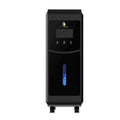
The RevitaSpring H900 Molecular Hydrogen + Oxygen Generator is the most streamlined option in our H-Series.
It offers three selectable total-flow settings—900, 675 and 450 mL/min. At maximum output, manufacturer specifications list 600 mL/min of hydrogen and 300 mL/min of oxygen, with stated hydrogen purity of 99.99%. RevitaSpring
Its relatively compact, movable floor-standing design makes it particularly appealing for an individual wellness routine or a dedicated bedroom, home gym or wellness space.
This is the model I would look at first if your priority is a straightforward entry into an at-home molecular hydrogen setup without automatically moving to the highest-output machine.
RevitaSpring H1500: More Output and More Flexibility
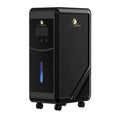
For someone who wants additional capacity, the RevitaSpring H1500 Molecular Hydrogen + Oxygen Generator increases maximum total output to 1,500 mL/min.
At maximum output, manufacturer specifications list 1,000 mL/min H₂ and 500 mL/min O₂. It also includes two dedicated hydrogen connections, which gives the system greater flexibility for individual or simultaneous two-person use. RevitaSpring
Its three selectable total-flow settings are 1,500, 1,350 and 900 mL/min.
For a household where more than one person may want access, or for someone who simply wants a higher-capacity system, the H1500 offers a meaningful step up from the H900.
RevitaSpring H3000: The Highest-Output H-Series Option
At the top of the collection is the RevitaSpring H3000 Molecular Hydrogen + Oxygen Generator.
It offers up to 3,000 mL/min total output, making it the highest-output model in the RevitaSpring H-Series and an option for customers looking for greater capacity in a dedicated home, studio or shared wellness environment. RevitaSpring
The important thing isn't automatically choosing the biggest number.
It's choosing the equipment that makes sense for your intended routine, space and needs.
You can also compare the complete RevitaSpring Molecular Hydrogen collection before deciding.
Is More Hydrogen Always Better?
This is an important question—and one where marketing can easily get ahead of science.
At present, there isn't a universally established consumer “perfect dose” of molecular hydrogen for general wellness.
Studies use different concentrations, administration methods, session lengths, participant populations and endpoints. That's one of the reasons comparing hydrogen studies can be difficult. PubMed
So I would be cautious with anyone claiming that a particular output automatically produces a particular health outcome.
Higher-output equipment provides greater gas-production capacity.
That is a technical specification.
It should not automatically be translated into “twice the output means twice the benefit.”
Those are two completely different claims.
Hydrogen Water vs. Hydrogen Inhalation: What's the Difference?
This is one of the most common questions people have when they first encounter molecular hydrogen.
Both methods deliver molecular hydrogen, but they do it differently.
With hydrogen-rich water, H₂ gas is dissolved into water and then consumed.
With hydrogen inhalation, hydrogen gas is generated and inhaled through equipment designed for that purpose.
Hydrogen's low solubility in water presents practical limitations for hydrogen-water delivery. The 2023 review reported water solubility around 1.57 mg/L under standard ambient conditions and discussed the different practical challenges associated with each administration method. MDPI
That doesn't make hydrogen water “bad” or inhalation automatically “better.”
They're simply different delivery approaches, and both appear in the research literature.
The right question isn't necessarily:
Which one wins?
It may be:
Which method has actually been studied for the outcome I'm reading about?
That's an important question because you can't automatically take the result of a hydrogen-water study and assume an inhalation device will produce the identical result, or vice versa.
What About Molecular Hydrogen and Healthy Aging?
This is probably one of the most tempting areas for exaggerated marketing.
Oxidative stress, inflammation and mitochondrial function are all deeply connected with aging biology, and molecular hydrogen has been studied in relation to these processes.
That makes hydrogen scientifically relevant to healthy-aging research.
But it does not make hydrogen an anti-aging cure.
Those are very different statements.
Much of the mechanistic research is fascinating. Researchers have explored hydrogen in connection with oxidative damage, mitochondrial processes, signaling pathways and cellular stress responses. PubMed
What we don't yet have is strong evidence showing that using a consumer hydrogen generator will extend a person's lifespan or reverse aging.
I wouldn't make that promise.
And I don't think we need to.
The emerging science is interesting enough on its own.
Is Molecular Hydrogen Safe?
Hydrogen has shown a favorable safety profile in many research settings, but the gas itself is flammable, and equipment design, concentration, ventilation, operation and manufacturer instructions matter.
The 2023 clinical review specifically discusses hydrogen's flammability as an administration challenge and notes that safety and delivery technology remain important areas for continued development. MDPI
This is one reason I care so much about equipment documentation.
For example, RevitaSpring's hydrogen + oxygen machine manufacturer has provided conformity documentation related to electrical and electromagnetic standards. That's useful information about the equipment, but it should not be confused with evidence that the machine treats medical conditions. RevitaSpring
If you own a hydrogen generator, use it exactly as directed.
Follow the manufacturer's instructions regarding water, ventilation, placement, operation, maintenance and accessories. Don't modify the machine or improvise your own delivery configuration.
So…Is Molecular Hydrogen the Future of Wellness?
Maybe.
But I think there's a better answer.
Molecular hydrogen is one of the more fascinating emerging areas of wellness research—and it's early enough that we should remain curious without pretending every question has already been answered.
That's where I land after reading the research.
There is a legitimate scientific foundation.
There are human clinical studies.
There are systematic reviews and meta-analyses.
There are interesting findings involving oxidative biology, exercise and fatigue, inflammatory signaling and numerous medical research areas, including cancer. PubMed Central (PMC)
There are also small studies, inconsistent protocols, mixed results and unanswered questions.
Both things can be true at the same time.
And I actually find that more exciting than a wellness trend built around a miracle claim.
Science is supposed to evolve.
What to Look for Before Buying a Molecular Hydrogen Generator
If molecular hydrogen has caught your attention and you're considering bringing a generator into your home, I'd focus less on dramatic claims and more on the things you can actually evaluate.
Look at the machine's hydrogen and oxygen output. Find out whether the flow is adjustable. Ask what purity the manufacturer specifies. Understand what type of water the unit requires. Review its dimensions and electrical requirements. Look for available equipment testing and conformity documentation. Understand the warranty. Ask how replacement parts and support are handled. And most importantly, make sure you understand how the equipment is intended to be used before ordering.
That may not sound as exciting as a headline promising to “reverse aging.”
But when you're spending thousands of dollars on specialized wellness equipment, good information is part of the product.
That's something I feel strongly about.
Why I Added Molecular Hydrogen to RevitaSpring
I didn't want to add hydrogen generators simply because molecular hydrogen was becoming popular.
I wanted to understand what was behind it.
The more I researched, the more interested I became, not because I found proof of every extraordinary claim being made online, but because I found a surprisingly substantial and growing body of scientific literature asking serious questions about a very simple molecule.
That felt worth paying attention to.
It also fits naturally with what I want RevitaSpring to be.
A cold plunge isn't about promising that cold water will fix everything.
An infrared sauna doesn't need miracle claims to create a meaningful ritual.
Red light therapy doesn't need to be presented as a cure-all to be scientifically interesting.
And molecular hydrogen doesn't need exaggerated promises either.
My goal is to give you access to thoughtfully selected equipment, help you understand what you're buying, share the research as honestly as I can, and let you decide what belongs in your wellness routine.
That's why the RevitaSpring H-Series includes different output levels rather than a one-size-fits-all recommendation.
You can explore all RevitaSpring molecular hydrogen + oxygen generators and compare the H900, H1500 and H3000 based on the type of home wellness setup you want to create.
Frequently Asked Questions About Molecular Hydrogen
What are the potential benefits of molecular hydrogen?
Research has investigated molecular hydrogen across numerous areas, including oxidative stress, exercise and fatigue, cardiovascular conditions, neurological conditions, respiratory conditions, cancer and inflammatory pathways. Results vary substantially by study, population and delivery method, so molecular hydrogen should not currently be described as proven to prevent or treat these conditions. PubMed Central (PMC)
Does molecular hydrogen reduce oxidative stress?
The answer is more complicated than many advertisements suggest. Early laboratory research found selective effects involving highly reactive hydroxyl radicals. However, a 2024 exercise meta-analysis found improved antioxidant capacity but no significant reduction in the measured exercise-induced oxidative-stress marker versus placebo. Different populations and endpoints may produce different results. Nature
Does molecular hydrogen improve athletic performance?
Not conclusively. A meta-analysis involving 402 participants found modest effects on perceived exertion and blood lactate but did not find significant improvements in VO₂max, VO₂peak or endurance performance. PubMed
Is molecular hydrogen the same thing as hydrogen water?
Both involve H₂, but the delivery is different. Hydrogen-rich water contains dissolved molecular hydrogen, while hydrogen inhalation delivers hydrogen as a gas. Both approaches have been studied. MDPI
What is a molecular hydrogen + oxygen generator?
These machines use electrolysis to generate hydrogen and oxygen from water. Specifications differ considerably among models, so consumers should compare output, flow settings, manufacturer-stated purity, water requirements, electrical specifications, safety instructions and available documentation.
The Bottom Line
The wellness world has a habit of moving very quickly.
A study comes out. Social media finds it. Before long, something that scientists described as promising is being marketed as proven.
I'd like RevitaSpring to do things differently.
Molecular hydrogen deserves attention.
The research is real.
The questions scientists are asking are fascinating.
And the growing body of human research makes this an area I believe is worth continuing to watch closely, and I will.
But curiosity and honesty can live in the same place.
We can be excited about where molecular hydrogen research may be going without pretending we've already arrived.
Maybe molecular hydrogen will eventually become an important part of mainstream wellness—and perhaps even specific areas of medicine. (I hope so)
Maybe future research will narrow its usefulness to particular situations.
Either way, we're going to learn a lot more.
And if you've done your research and decide molecular hydrogen is something you'd like to incorporate into your own home wellness space, RevitaSpring is here to help you understand the equipment and choose a system that fits your routine.
Wellness should begin with good information, thoughtful choices and creating habits that genuinely fit into your life.
And sometimes, the future of wellness starts with simply being curious enough to learn what's next.
Explore RevitaSpring Molecular Hydrogen + Oxygen Generators
Educational disclaimer: This article is for general educational and informational purposes only and is not medical advice. Molecular hydrogen is an active area of research. RevitaSpring molecular hydrogen + oxygen generators are intended for general wellness use and are not intended to diagnose, treat, cure or prevent disease. No specific health outcome is guaranteed. Consult an appropriate healthcare professional if you have a medical condition, are pregnant, use supplemental oxygen or medical devices, or have questions about whether a hydrogen product is appropriate for you.